

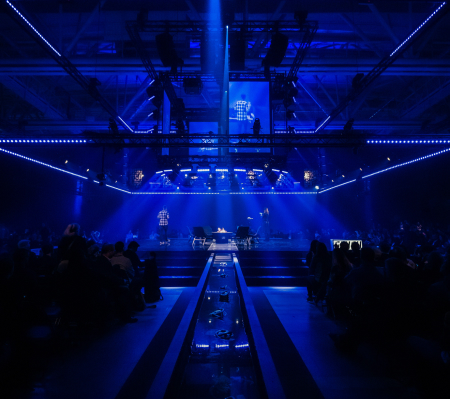
For years, the event industry has been hooked on volume. Bigger stages, brighter lights, louder speakers. The unspoken promise was that if you shouted loudly enough, something meaningful would happen. But somewhere in the last couple of years, things changed quietly. We are now witnessing the rise of something far more radical: the quiet event.

The trends shaping 2026 tell a story of collective exhaustion, not with gathering itself, but with gathering that demands performance. Attendees are no longer showing up to be impressed by the theatrics. They are showing up to purpose-driven events, even and especially if it means smaller venues, deeper connections, more intimate and niche experiences for local audiences. And the events thriving in this new landscape are those that understand the difference.
Consider the migration toward daytime and wellness-focused programming. It is a fundamental recognition that attention is finite and overstimulation is counterproductive in today's day and age. Events that schedule guided walks before the first panel, or replace evening networking with morning coffee conversations, are protecting it human connection. They understand that real dialogue requires more rhythm and regulation, less adrenaline and hype.
Then there is the quiet rebirth of the club. The book club, the film club, the knitting circle: all are now reimagined under brand umbrellas. These are communities that happen to meet regularly to savor a singular experience in a closed group of like-minded individuals. The format is secondary to the ritual. A brand that hosts a monthly cinema screening or a shared reading session is a host, it is teaching its audience how to want things and value experiences.
And perhaps most importantly, the authority has moved from the stage to the room. Human connection, peer-to-peer interaction is the main act in 2026. Attendees trust each other more than they trust any keynote or passive content consumption. The most valuable content is now created and discovered horizontally, not vertically.
The message is clear: we no longer need events to energise us. We need them to restore us.
For years, the event industry has been hooked on volume. Bigger stages, brighter lights, louder speakers. The unspoken promise was that if you shouted loudly enough, something meaningful would happen. But somewhere in the last couple of years, things changed quietly. We are now witnessing the rise of something far more radical: the quiet event.
The trends shaping 2026 tell a story of collective exhaustion, not with gathering itself, but with gathering that demands performance. Attendees are no longer showing up to be impressed by the theatrics. They are showing up to purpose-driven events, even and especially if it means smaller venues, deeper connections, more intimate and niche experiences for local audiences. And the events thriving in this new landscape are those that understand the difference.
Consider the migration toward daytime and wellness-focused programming. It is a fundamental recognition that attention is finite and overstimulation is counterproductive in today's day and age. Events that schedule guided walks before the first panel, or replace evening networking with morning coffee conversations, are protecting it human connection. They understand that real dialogue requires more rhythm and regulation, less adrenaline and hype.
Then there is the quiet rebirth of the club. The book club, the film club, the knitting circle: all are now reimagined under brand umbrellas. These are communities that happen to meet regularly to savor a singular experience in a closed group of like-minded individuals. The format is secondary to the ritual. A brand that hosts a monthly cinema screening or a shared reading session is a host, it is teaching its audience how to want things and value experiences.
And perhaps most importantly, the authority has moved from the stage to the room. Human connection, peer-to-peer interaction is the main act in 2026. Attendees trust each other more than they trust any keynote or passive content consumption. The most valuable content is now created and discovered horizontally, not vertically.
The message is clear: we no longer need events to energise us. We need them to restore us.


Get in touch today to discuss how we can help your brand stay ahead


recommended reading
.jpg)
.jpg)
.jpg)
